What is RWA (Real World Asset)? A Clear Explanation for Beginners (2026)
When I was studying Polygon and building RizeCoin, I kept wondering whether blockchain had any connection to the physical world. Digital tokens going up and down felt disconnected from anything real. Then I found RWA — Real World Assets — and it changed how I understood the whole space.
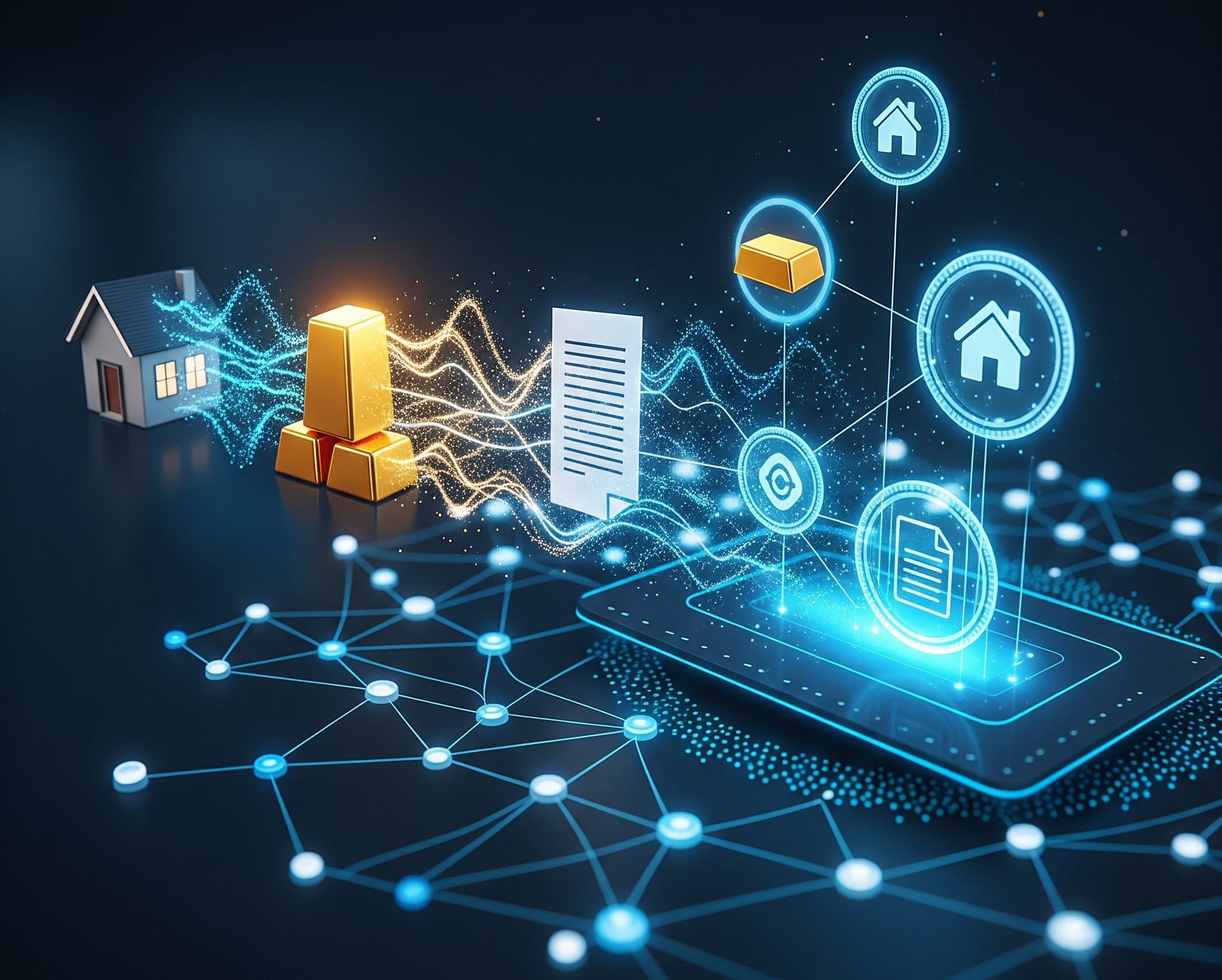
RWA is the process of representing ownership of physical or financial assets on a blockchain. A house, a bond, gold, a share in a fund — these can be tokenized, meaning their ownership is recorded and transferred on-chain. In 2026, this isn’t a theoretical concept. The on-chain RWA market has grown beyond $36 billion, with institutions like BlackRock, JPMorgan, and Goldman Sachs actively participating.
The Simple Analogy: Fractional Ownership
The clearest way to understand RWA is through fractional ownership.
Imagine a piece of land worth $100,000. In traditional finance, you need $100,000 to own it — or you borrow from a bank that decides whether you qualify. With tokenization, that land can be divided into 100,000 digital tokens worth $1 each. Anyone can buy one token and own a proportional share of the asset. When the land generates income or increases in value, token holders participate proportionally.
Government bonds and Treasuries: The largest category. Tokenized U.S. Treasuries alone exceed $8.7 billion on-chain. BlackRock’s BUIDL fund is a prominent example.
Real estate: Fractional ownership of properties, enabling investment in real estate without buying an entire building.
Commodities: Gold-backed tokens like PAXG and XAUT allow holders to own tokenized gold without physical storage.
Private credit: Business loans and credit facilities tokenized and made available to DeFi investors.
Funds: Investment fund shares tokenized for 24/7 liquidity and global access.
How Tokenization Actually Works
The process has several steps. First, a real-world asset is identified and legally structured for tokenization. A legal entity — often a trust or special purpose vehicle — holds the physical asset. Then digital tokens are issued on a blockchain like Polygon PoS that represent ownership claims on that legal structure.
The token holder’s rights are defined by legal agreements, not just by the blockchain. The blockchain handles the transparency and transferability — anyone can verify ownership on PolygonScan. The legal structure handles what those ownership rights actually mean in practice.
Why Institutions Are Entering RWA in 2026
The institutional interest in RWA isn’t about speculation. It’s about infrastructure.
Traditional financial systems settle transactions in days. Blockchain settles in seconds. Traditional systems operate on business hours. Blockchain operates 24/7. For institutions moving large amounts of capital, these differences matter enormously. Tokenized assets can be used as collateral instantly, settled without intermediaries, and traded across borders without the friction of traditional systems.
This is why Standard Chartered’s CEO predicted most transactions will eventually be tokenized. Not because blockchain is exciting — because it’s more efficient.
Why This Connects to RizeGate’s Mission
RWA matters for RizeGate because it extends the same logic that makes DeFi powerful to the real economy. A farmer in a region with no banking infrastructure cannot access capital markets. A tokenized version of their land could allow global investors to provide capital directly, without a bank deciding who qualifies.
This isn’t happening at scale yet for the unbanked. The institutional RWA market is currently focused on Treasuries and bonds — assets that already exist within traditional finance. But the infrastructure being built now is the same infrastructure that could eventually serve people who’ve never had a bank account.
That’s the long game behind why RWA matters to me.
Honest Limitations
RWA is not without problems. The legal complexity is significant — a token representing ownership of real estate in one country may have completely different legal standing in another. Regulation is still developing. Liquidity for many RWA tokens is limited compared to major cryptocurrencies.
And the promise of financial inclusion through RWA is still largely theoretical. The $36 billion on-chain RWA market is dominated by institutional assets — Treasuries, funds, and credit products that primarily serve sophisticated investors. The gap between institutional RWA and accessible RWA for the unbanked remains large.
Understanding where we are now versus where the technology could eventually go is important for any honest assessment of the space.


Comments