What is a Node? Full, Light, and Archive Explained (2026)
When I started learning about Polygon and blockchain, I kept hearing that “no one controls it” and “everyone maintains it.” That sounds good in theory. But I immediately wondered: where is the data actually stored? If there’s no central server, what’s holding everything together?
The answer is nodes — individual computers all over the world that each hold a copy of the blockchain’s data. Understanding what they are explains why blockchain works the way it does, and why it can’t easily be taken down or manipulated.
What a Node Actually Is
A node is any computer that participates in a blockchain network by storing and validating data. When a transaction happens on Polygon PoS, it doesn’t go to one server. It gets broadcast to thousands of nodes simultaneously. Each node checks whether the transaction is valid and adds it to their copy of the record.
The result is that the same data exists in thousands of places at once. If one node goes offline, the network keeps running. If someone tries to alter their copy of the data, thousands of other nodes will reject the change because it doesn’t match their records. This is what makes the system resistant to manipulation.
The Three Types of Nodes
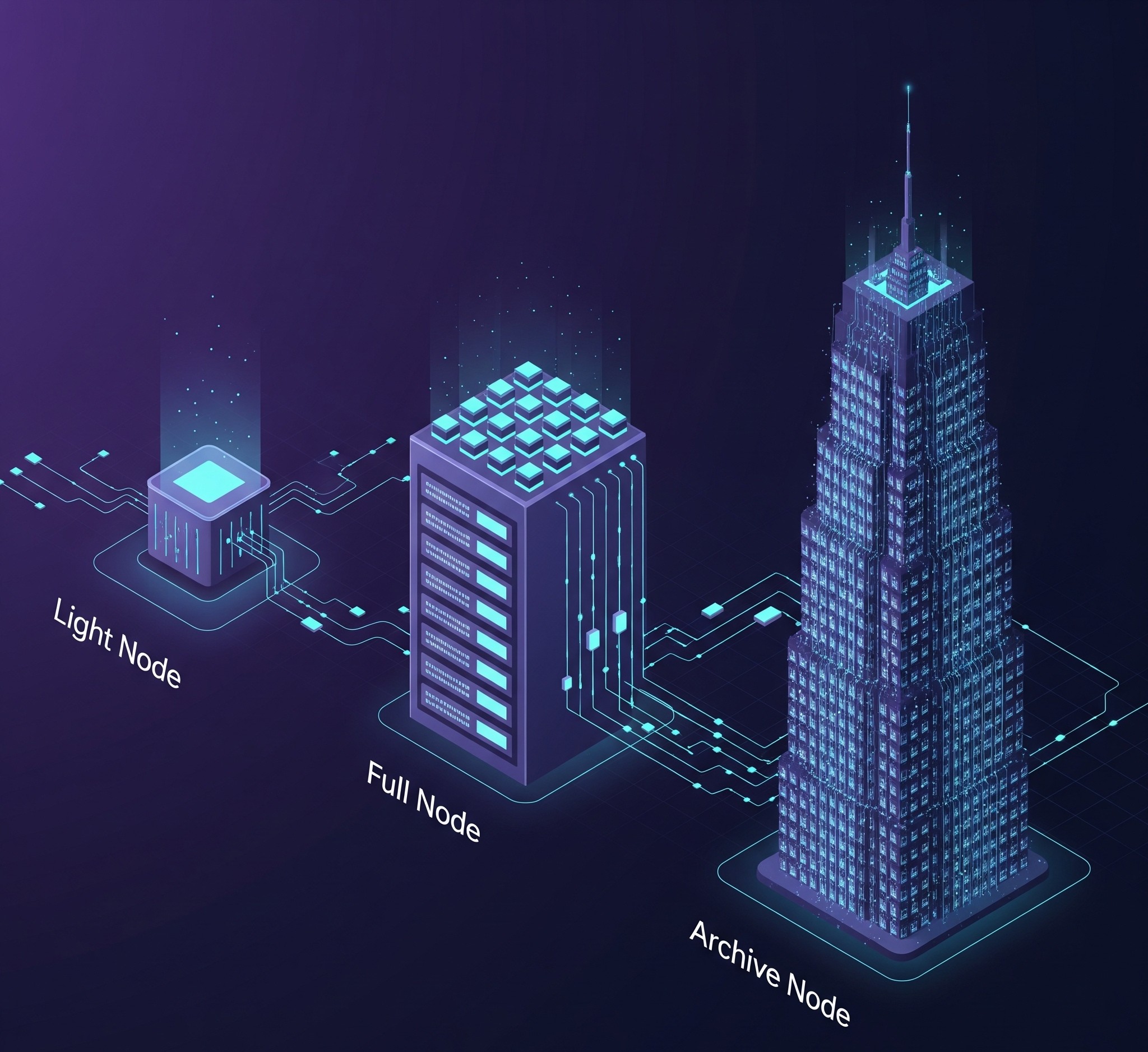
Not every node stores the same amount of data. There are three types, each with a different level of commitment to storing the blockchain’s history.
Stores the complete blockchain from a recent point forward. Verifies every transaction independently. This is the backbone of the network — full nodes are what make trustless verification possible. They don’t need to ask anyone else whether a transaction is valid. They check it themselves.
Light Node
Stores only block headers — a summary of each block rather than the full contents. When a light node needs to verify something specific, it asks a full node for the details. This is how mobile apps and lightweight wallets can interact with the blockchain without storing terabytes of data.
Archive Node
Stores everything — including the complete state of the blockchain at every single block since the beginning. If you want to know the exact balance of a specific wallet at a specific block three years ago, only an archive node can answer that question instantly.
I genuinely thought it was a joke. Storing the complete state of the blockchain at every single moment since it began — the amount of data involved is enormous, growing every second, and requires hardware that a regular person can’t run at home.
But then I understood why it exists. When I was checking RizeCoin’s transaction history on PolygonScan and looking at historical data, that information is coming from archive nodes. The “complete transparency” that makes blockchain trustworthy depends on someone storing all of it.
Services like Alchemy and Infura run archive nodes so that regular users can access historical data without running one themselves.
Why Nodes Matter for Regular Users
Most people using Polygon never think about nodes. They just open MetaMask, connect to the network, and start transacting. But every time MetaMask checks your balance or submits a transaction, it’s communicating with a node through an RPC endpoint.
The RPC URL you enter in MetaMask is essentially pointing your wallet at a node that will answer its requests. Understanding nodes isn’t necessary to use Polygon. But it explains why blockchain works differently from a regular app. A regular app goes down when its server goes down. Polygon keeps running because the data lives on thousands of nodes simultaneously — and no one person controls them all.
For the best RPC URL options for MetaMask, see Best Polygon RPC URL for MetaMask (2026).
Validators and Nodes
On Polygon PoS, Validators run full nodes as part of their role in securing the network. They stake POL tokens, run nodes, and validate transactions. In return they earn rewards. The nodes they run are what make the validation process possible — without the node, there’s nothing to validate with.

Comments